
Healthwatch Homelessness Report & Past Tents: Putting lived experience at the heart of support
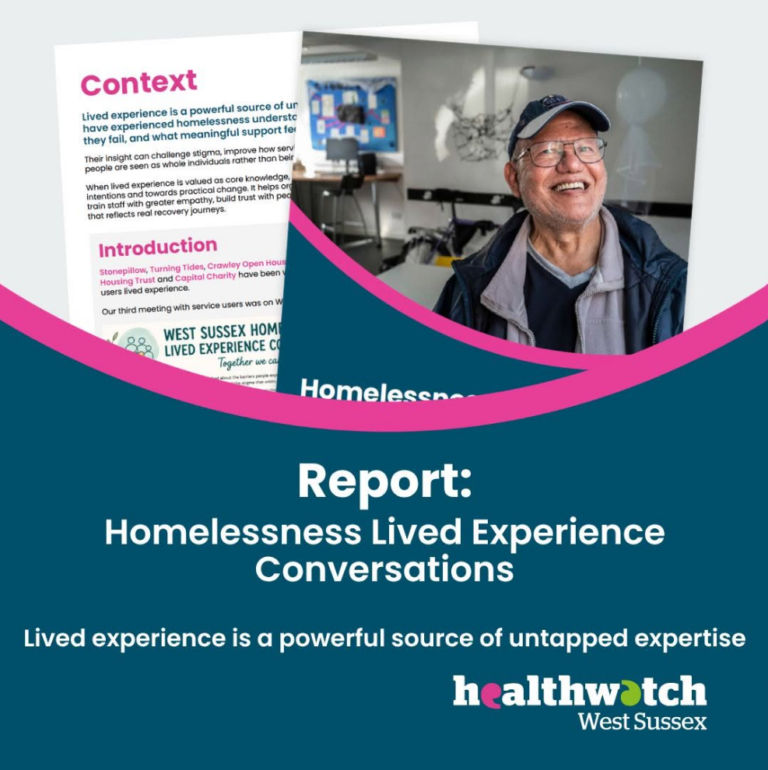
We are working alongside local homelessness organisations and Healthwatch West Sussex to ensure that the experiences, knowledge and ideas of people who have experienced homelessness help shape services and drive meaningful change.
The work brings together Stonepillow, Turning Tides, Crawley Open House, Bognor Housing Trust, Healthwatch West Sussex and CAPITAL.
Lived experience offers valuable insight into how services work in practice, where people encounter barriers, and what meaningful support looks like. Through Past Tents, we are working collaboratively to ensure this knowledge is heard, valued and used to influence the future of homelessness support in West Sussex.
Bringing lived experience into the conversation
Past Tents brings together people with lived experience of homelessness and representatives from local organisations. The group provides space to reflect on experiences, identify gaps in support and explore practical ways to improve services.
Our third meeting took place in Crawley on 29 July 2026. The discussions explored the challenges people continue to face, even after their immediate housing crisis has passed, and how lived experience can help shape a more compassionate and effective approach to support.
The group agreed on the name Past Tents, reflecting where people have been while recognising that recovery, learning and change continue.
Recognising lived experience as expertise
A key message from the meeting was that stigma can continue long after homelessness itself. Feeling judged by professionals, services and wider society can affect confidence, relationships, trust and people’s willingness to seek help.
The group also highlighted how support does not always reflect the reality of recovery. Progress is rarely straightforward, and people may need continued stability and support as they rebuild their lives. Services must recognise individual circumstances rather than relying on pathways or criteria that do not reflect people’s actual needs.
At CAPITAL, we believe lived experience is expertise. People who have navigated these challenges bring knowledge that can help services question assumptions, strengthen staff understanding and develop support that better reflects people’s lives.
From sharing experiences to creating change
The conversations also explored how lived experience can influence services beyond simply sharing feedback.
Ideas included developing lived experience stories through poetry, photography, artwork and creative writing, alongside opportunities for peer support, lived experience-led training, reverse mentoring and co-production.
These approaches can help challenge stereotypes, build hope and ensure that people with lived experience have meaningful opportunities to contribute their skills and knowledge.
Importantly, the group recognised that sharing personal experiences must be safe, voluntary and dignified. People should remain in control of their own stories, with consent, choice and appropriate support at the centre of the process.
Working together for the future
Past Tents is about moving beyond conversations towards practical action. The insights gathered will help shape future meetings, inform the development of a lived experience stories project, and support ongoing discussions with local organisations, commissioners and decision-makers.
As a partner in this work, CAPITAL is committed to supporting approaches that recognise people’s strengths, challenge stigma and place lived experience at the heart of decisions about the services that affect them.
Thank you to everyone involved in Past Tents for sharing their perspectives and helping to shape these important conversations.
Read Lived Experience of Homelessness and Related Challenges PDF
Healthwatch West Sussex has published the report from the third Lived Experience Homelessness Conversations meeting, setting out the key discussions, priorities and opportunities for change.
Involving people with lived experience improves charities by ensuring services bettermeet the needs of service users.
Thus, enhancing service design by including voices of service users and increasing credibility with the public and funders.
Lived experience inclusion leads to more relevant information, better decision making through diverse perspectives, staff and volunteers are more connected to the issues the charity addresses.
– Healthwatch Report